If you are choosing between a sleek, view-forward retreat near the lifts and a classic in‑town Victorian with a front porch and walkable Main Street life, you are not alone. Breckenridge offers two distinct home experiences that both deliver luxury, but in very different ways. In this guide, you will learn where each home type clusters, how they look and live, what ski access and walkability really mean, and which rules and maintenance items matter before you buy. Let’s dive in.
Breckenridge at a glance
Set at roughly 9,600 feet, Breckenridge is a compact alpine town where the Historic Main Street District meets a world-class ski resort climbing Peaks 7 through 10 of the Tenmile Range. The result is a clear geographic split: an in‑town historic core and slope‑adjacent neighborhoods near the resort base areas. You will see both home types within a few minutes of each other, but the day‑to‑day experience can feel very different. For quick context on the town and elevation, see the Breckenridge overview on Wikipedia.
Where you find each home type
Modern alpine neighborhoods
You will find contemporary “mountain‑modern” homes in slope‑adjacent enclaves like Shock Hill, Timber Trail, and the benches around the Peak 8 and Peak 9 base areas. These settings prioritize view corridors, quick lift access, and larger custom footprints. Shock Hill sits by the protected Cucumber Gulch Preserve and near the BreckConnect Gondola mid‑station, which shapes both its access and its conservation framework. Learn more about gondola and town transit connections on GoBreck’s transportation page and review the Cucumber Gulch Overlay Protection District if that area is on your short list.
Closer to town, the Four O’Clock run corridor and parts of Warriors Mark offer a mix of homes and townhomes that trade true slope‑edge living for easier strolls to shops and dining. Many of these addresses highlight ski‑back convenience when snow and grooming allow.
Historic core blocks
The Historic District around Main Street holds Breckenridge’s late‑19th and early‑20th century building stock on tight, highly walkable parcels. In‑town residential pockets off Main Street emphasize proximity to restaurants, events, and trailheads rather than direct lift adjacency. Design and density controls shape change here, preserving the district’s rhythm and scale. The Town’s overview of the Historic District and its standards is an essential read if you plan to renovate or add on.
Architecture and materials
The modern‑alpine look
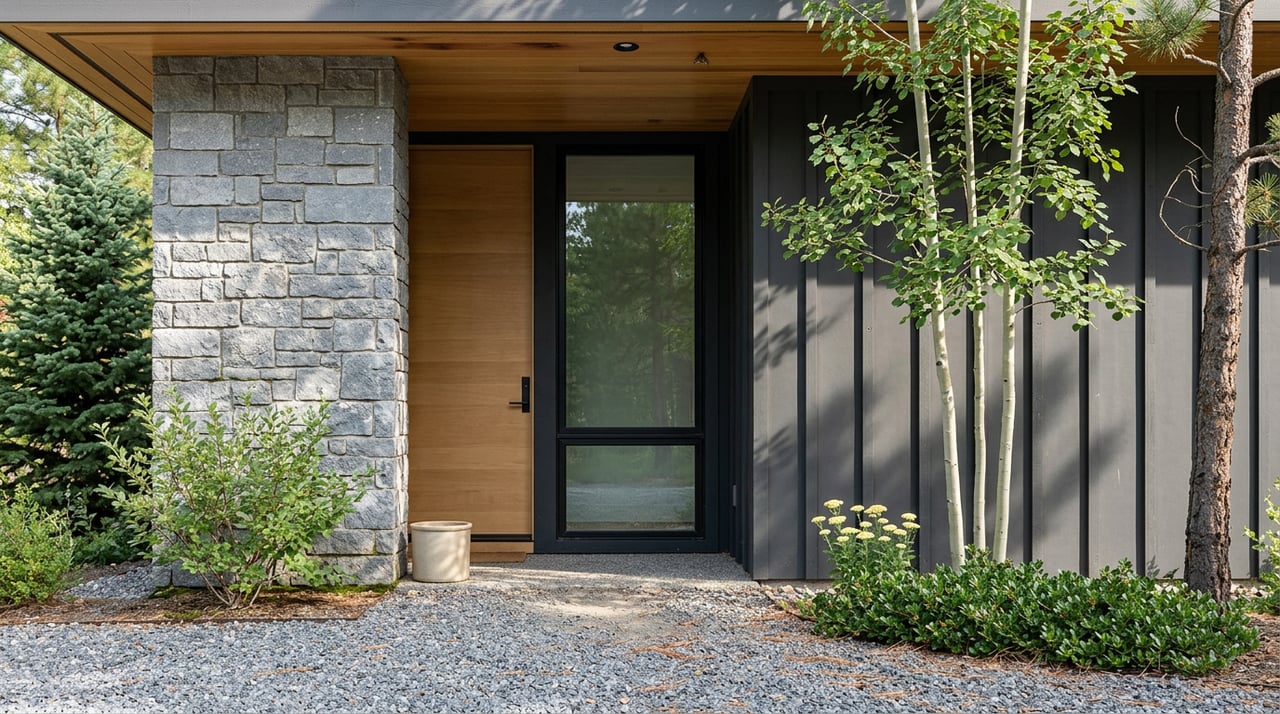
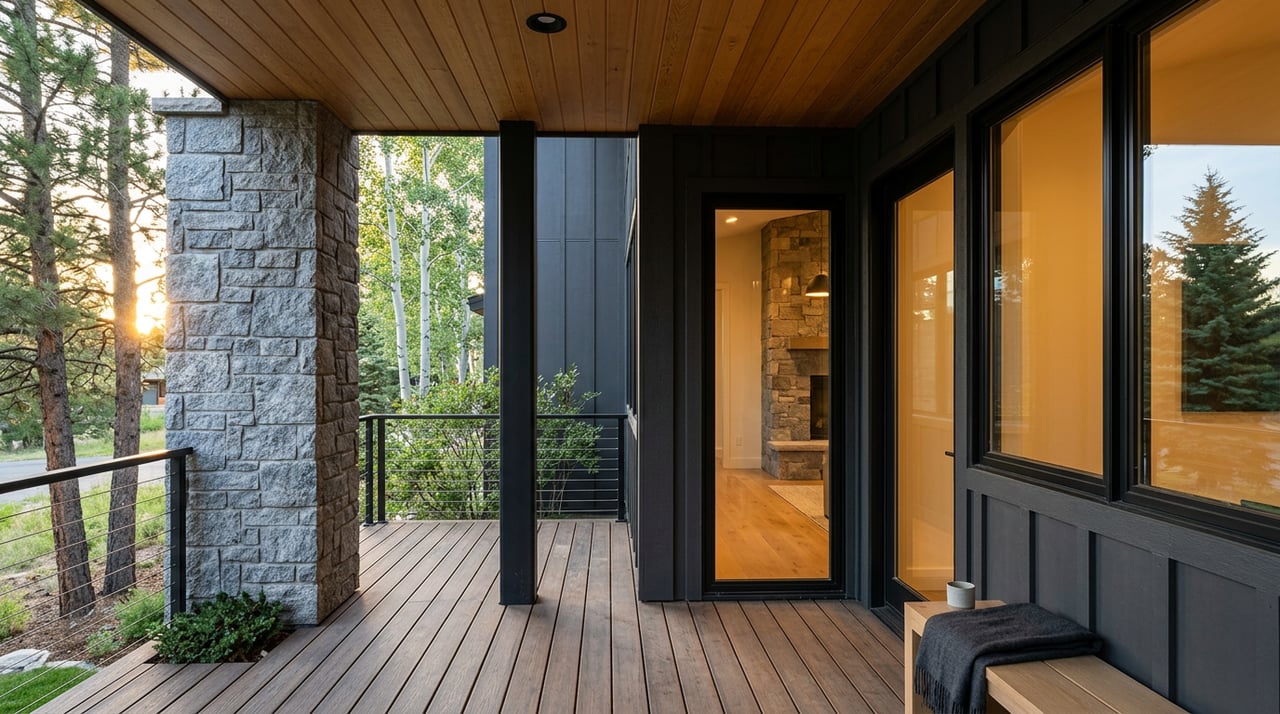
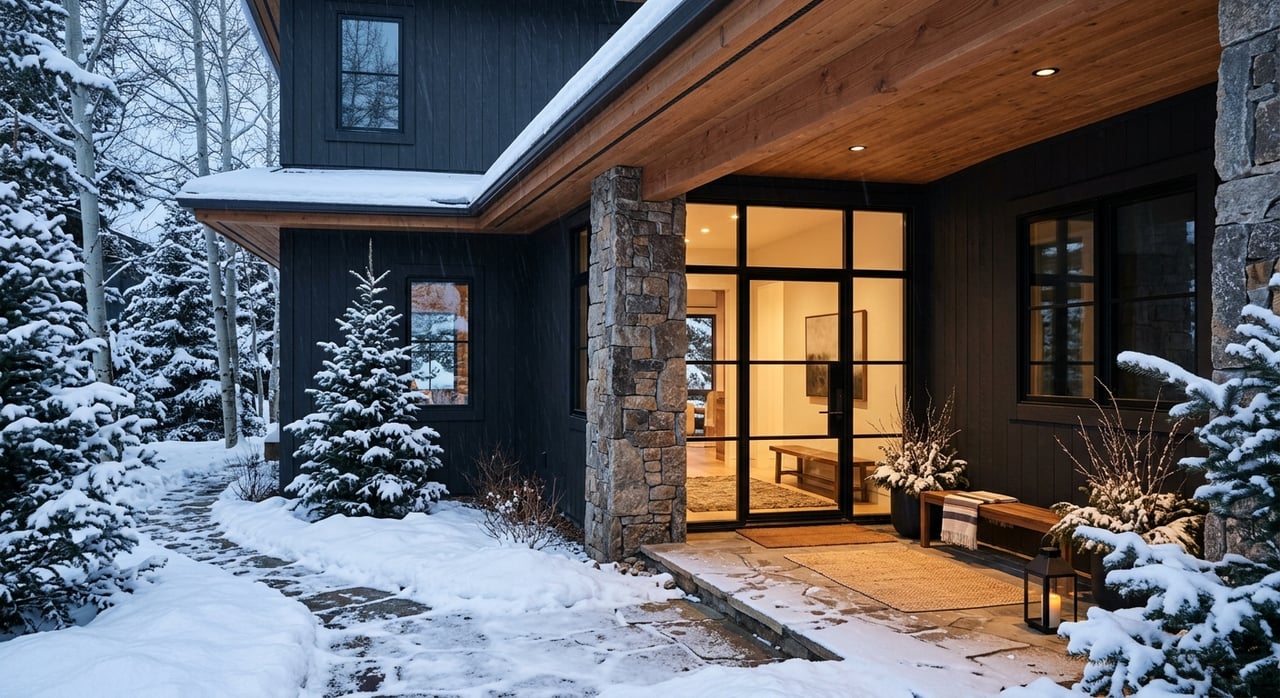
Modern‑alpine homes lean into crisp lines, big glass, and natural materials. Expect rectilinear volumes, low or shed rooflines paired with gables to shed snow, and window walls aimed at mountain panoramas. Inside, the sightline often runs through an open great room with high ceilings and clerestories for light. For a deeper dive on these design moves, see Mountain Living’s take on mountain‑modern homes.
Material palettes favor stone, warm or charred wood cladding, and dark metal accents over a neutral base. Designers pair tactile, alpine textures with clean finishes and integrated lighting for a refined but durable feel. Explore common elements in this overview of mountain‑modern design.
The historic‑core character
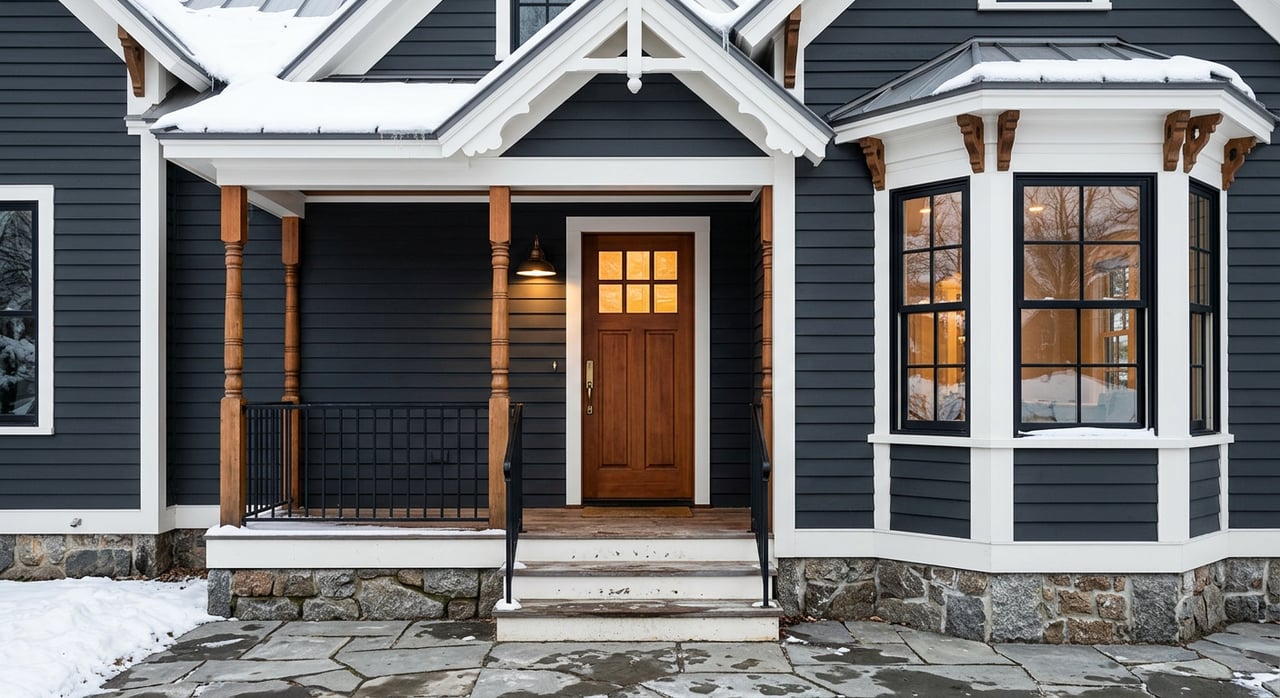
Downtown homes reflect Victorian‑era forms adapted to the Rockies: pitched roofs, asymmetrical facades, bay windows, and front porches that face the street. Compared with East Coast counterparts, Breckenridge examples are often less ornate, but still read as period with their profiles and trim. Learn the broader vocabulary in Britannica’s primer on Victorian architecture.
Expect painted wood siding, turned posts, and decorative details outside, with millwork and built‑ins inside. Many owners preserve these elements while updating kitchens, baths, and systems. For inspiration on color and finishes, Better Homes & Gardens profiles a range of historic palettes and detailing.
How they live inside
Floor plans and features in modern‑alpine homes
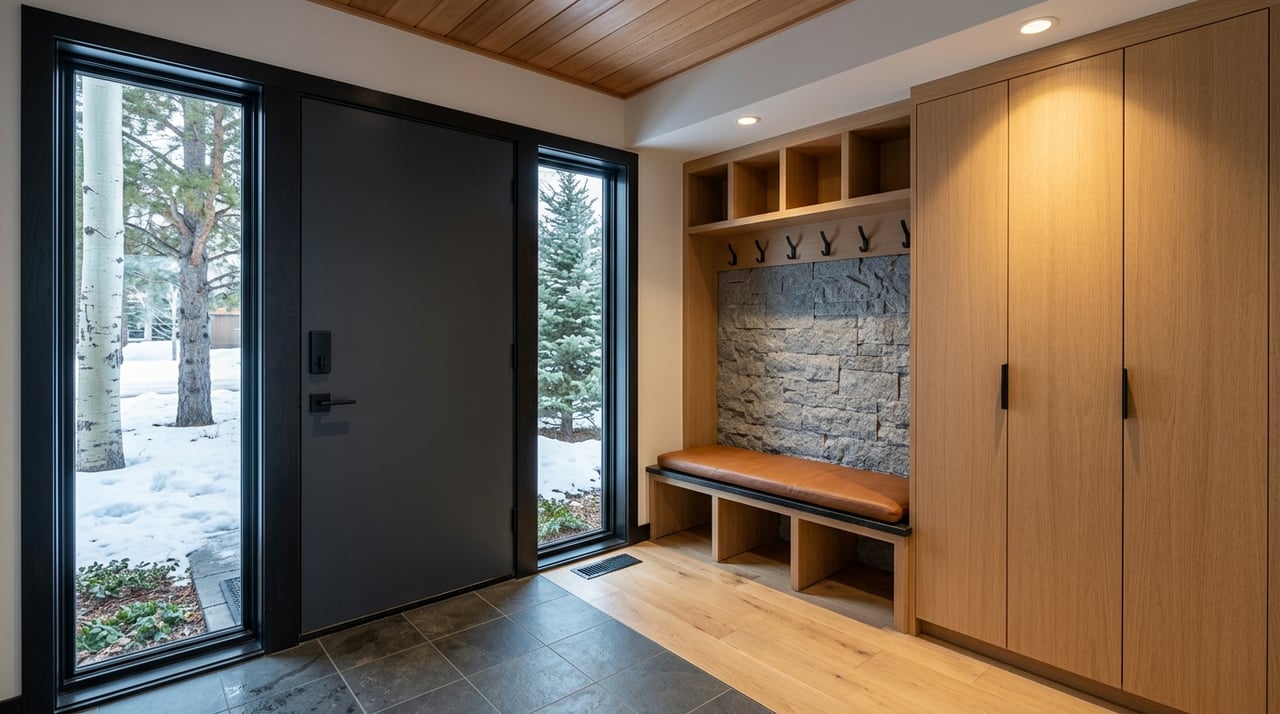
Plans typically sequence from garage and entry to a dedicated mudroom with ski storage, boot dryers, and durable stone or porcelain flooring. The core is an open kitchen/dining/living great room oriented to the view. Secondary wings or lower levels often hold bunkrooms, guest suites, a media or game room, and sometimes a wine room or office. See common planning moves in Mountain Living’s coverage of mountain‑modern design.
Function drives materials at key touchpoints. Look for slab cabinetry, large islands, engineered countertops, and hardwearing flooring. Mudroom layouts with benches, cubbies, and drying systems are standard in ski‑oriented homes; Architectural Digest’s mudroom ideas show what works in practice. Overall palettes tend to be neutral and quiet so views and furnishings take the lead, as outlined in this design guide.
Plan patterns in historic‑core homes
Older homes often have more compartmentalized rooms and narrower circulation, which many owners embrace for charm or gently open during renovation. Kitchens are frequent upgrade zones, and many properties add or rework mudrooms and basements to handle gear. Period trim, mantels, and built‑ins become focal points when balanced with modern mechanicals and insulation. A quick read on period layouts and detail can be found in Britannica’s Victorian overview and this historic finishes profile.
Outdoor space, walkability, and ski access
Outdoor living, different priorities
Modern‑alpine properties often showcase multi‑level decks and terraces, integrated hot tubs, and outdoor fireplaces that extend the great room outside. Orientation to sun and views is a key driver, especially on slope‑adjacent lots. In the historic core, outdoor space tends to be a front porch, small patio, or compact fenced yard that fits the neighborhood scale. The Town’s Historic District page explains why lot patterns and design controls keep outdoor zones more modest downtown.
Getting around town
If you want to step out your door to dinner and events, the in‑town Historic District is hard to beat. For ski days, Breckenridge operates the Free Ride bus network and the BreckConnect Gondola links the core of town to Peak 8 with a mid‑station that serves Shock Hill. That means you can live slope‑adjacent for true gear‑on convenience or in town and ride transit without moving the car. Review options on GoBreck’s transportation and parking page.
Understanding ski access
True ski‑in/ski‑out is concentrated in specific slope‑edge subdivisions and base‑area buildings, including Timber Trail and Peak 8 and Peak 9 complexes such as One Ski Hill Place and Crystal Peak Lodge. Near‑town zones like the Four O’Clock corridor and parts of Warriors Mark offer ski‑back routes when snow and grooming cooperate. Always verify the exact door‑to‑run connection and typical conditions for a specific property.
Ownership logistics and regulations
Historic‑district rules and density
Renovations in the Historic and Conservation Districts are reviewed for design compatibility and scale. The Town has a detailed Handbook of Design Standards, and widely cited guidance includes a limit of 9 above‑ground dwelling units per acre across much of the Historic District. If you plan to add on or reconfigure, speak with the Town early to align your scope with policy. Start with the Town’s Historic District page.
Cucumber Gulch protections near Shock Hill
Properties adjacent to the Cucumber Gulch Preserve are subject to an Overlay Protection District with rules that affect site work, lighting, and trail interfaces. This framework preserves habitat quality and shapes how nearby homes are designed and maintained. If you value privacy, wildlife, and natural views, review the Cucumber Gulch Overlay before you buy.
Short‑term rental licensing
Breckenridge requires an accommodation‑unit license for short‑term rentals and regulates where STRs are allowed. Zones, caps, fees, and responsible‑agent rules can materially change your investment case and carrying costs. Always verify a property’s zone and the current availability of a license before you underwrite rental income. See the Town’s STR licensing overview.
Snow, systems, and maintenance
At altitude, design and mechanical choices matter. Many high‑end homes use engineered roof assemblies for snow load, durable exterior materials against freeze‑thaw, and snowmelt or heated driveways for winter access. Inside, boot dryers and gear storage reduce wear and tear. Ask for documentation on mechanicals, roof details, and any snowmelt systems so you can plan maintenance and energy costs with confidence.
Which home fits you? A quick guide
Choose a modern‑alpine home if you want:
- Door‑to‑slope convenience with gondola or lift adjacency.
- Larger, view‑oriented great rooms with floor‑to‑ceiling glass.
- Purpose‑built ski features like mudrooms, bunkrooms, and rec spaces.
- Newer systems, contemporary finishes, and easy‑care materials.
- STR income potential in base‑area zones, subject to licensing.
Choose a historic‑core home if you want:
- In‑town walkability to restaurants, shopping, and events.
- Period architecture, front porches, and intimate streetscapes.
- A smaller lot and a lower‑maintenance yard.
- The satisfaction of sensitive renovation within a protected district.
- A lifestyle centered on Main Street with resort access by gondola or shuttle.
Your next step
If you are weighing modern‑alpine versus historic‑core living, a private tour will clarify how each option feels day to day. With deep local knowledge, design fluency, and development experience, Marty Frank can help you compare floor plans, verify ski access and STR factors, and model ownership costs so you can choose the right Breckenridge home with confidence.
FAQs
What defines a modern‑alpine home in Breckenridge?
- Clean volumes, expansive glass oriented to views, and natural materials like stone, wood, and dark metal accents, typically near the resort base areas; see Mountain Living’s overview for common design cues.
Where are historic Breckenridge homes located?
- In and around the Town’s Historic District along and off Main Street, on compact, walkable parcels subject to design standards outlined on the Town’s Historic District page.
How does ski access differ by neighborhood?
- Slope‑edge enclaves offer the most reliable ski‑in/ski‑out, while in‑town areas often provide ski‑back routes or quick shuttle and gondola access; always confirm the specific door‑to‑run path and typical conditions.
What should I know before renovating a historic‑core home?
- Expect design review, compatibility standards, and density controls such as a commonly cited 9 units per acre limit in much of the district; consult the Town’s Historic District guidance early in planning.
How do Breckenridge STR rules impact buying a second home?
- Short‑term rentals require a Town license and are regulated by zone caps, fees, and a responsible‑agent requirement; verify a property’s eligibility on the Town’s STR licensing page.