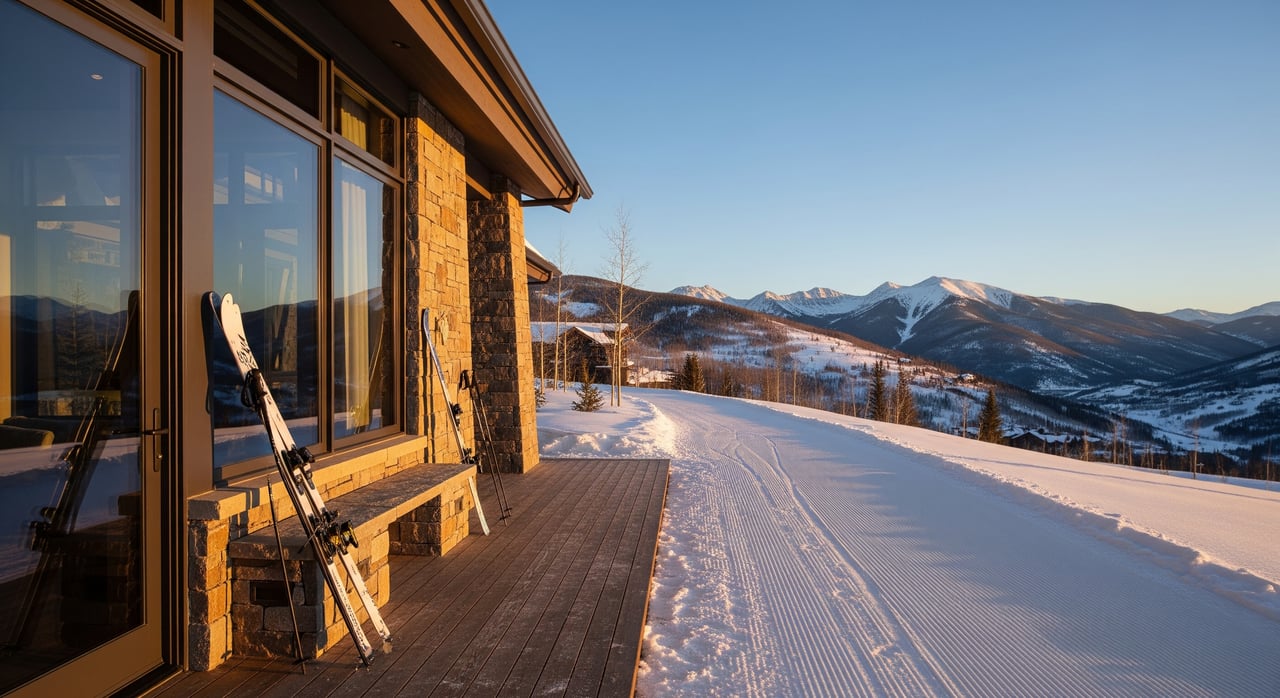
Is the phrase “ski-in, ski-out” as simple as clicking into your bindings at the door and gliding to the lift? In Keystone, the answer depends on the exact building, the route, and even the day’s snow conditions. If you are buying or selling in River Run, Mountain House, or nearby neighborhoods, understanding what the term really promises will help you protect value and avoid surprises. In this guide, you will learn how Keystone’s layout and operations shape true slope access, how to verify a listing’s claim, and what documentation matters most. Let’s dive in.
What ski-in, ski-out means here
“Ski-in, ski-out” describes the ability to reach groomed, lift-served terrain on skis or a snowboard without using a car. There is no single legal definition, so you need to confirm the details for each property. In Keystone, you will see several levels of access.
- Direct slope-adjacent (door-to-trail). A door, patio, or dedicated exit opens directly to a groomed run or maintained ski corridor that leads immediately to a lift or continuous skiable terrain.
- Building-adjacent with short transfer. A brief, often 1–3 minute walk or signed ski connector links the building to a trail or lift. You may carry skis for short stretches or cross steps, ramps, or a plaza.
- Base-area proximity via shuttle or gondola. The property sits inside the resort village and is convenient to lifts by a short shuttle or pedestrian route, but not directly on skiable snow.
- Near resort but not skiable from the door. Close enough to be convenient for skiers, sometimes marketed loosely as ski-in/ski-out. Always verify the exact route.
Key distinctions matter:
- Ski-through vs. ski-out. Some routes cross private land under an easement. Confirm recorded rights and signage.
- Groomed vs. ungroomed. Access that depends on natural snow or an ungroomed slope varies with weather and may not be reliable early or late season.
- Resort-controlled vs. backcountry. Only resort terrain is patrolled and mitigated for avalanche risk. Off-piste shortcuts carry higher risk and are not the same as lift-served ski-in.
Keystone terrain and lift context
Keystone’s layout strongly influences which buildings can claim direct slope access. The village hubs around River Run and the Mountain House/Dercum Square base concentrate lifts and gondolas. To evaluate a property’s route with precision, always consult the current Keystone Resort trail map and lift status and confirm how that map aligns with building entrances and ski corridors.
Snowmaking and seasonality
Keystone maintains snowmaking and grooming on many primary connectors, which helps stabilize access for slope-adjacent properties, especially early and late season. Secondary connectors and natural snow routes are more weather dependent. Before you rely on a connector, confirm whether it is groomed and part of daily operations through the mountain conditions resources on Keystone’s site.
Patrol, safety, and avalanche context
Resort-operated terrain benefits from routine ski patrol coverage and avalanche mitigation. Any route that skirts outside controlled boundaries or crosses unpatrolled slopes is a different risk profile. For regional conditions and planning, consult the Colorado Avalanche Information Center.
Village infrastructure and movement
Keystone’s pedestrian walkways, heated plazas in select areas, service roads, stairs, and resort shuttles all affect how practical it feels to move in boots with gear. A building that is 150 feet from a lift across a flat, heated plaza can be easier than one that technically touches snow but requires stairs, icy ramps, or awkward crossings.
How to verify a listing’s claim
Marketing language varies. Your goal is to translate the headline into a tested, documented route that works for your family and guests.
Test the exact route
- Walk and ski the route from the unit’s door to the nearest groomed trail or lift during different times of day.
- Repeat the return route in late afternoon when snow is cut up or the light is flat.
- Note any stairs, steep ramps, service road crossings, or narrow walkways that complicate the path in boots.
- Cross-check what you see with the current trail and lift information.
Confirm recorded access and responsibilities
- Review plats, deeds, and recorded easements for any rights-of-way across private or resort property.
- Request written confirmation from the HOA regarding exterior doors, corridor use, and snow removal standards that affect the route.
- If you plan to study records, the Summit County Clerk & Recorder resources are a starting point for recorded documents.
Understand HOA rules that affect usability
- Check rules for ski storage, lockers, and use of common corridors.
- Confirm hours or restrictions on slope-side exits and whether gear can be left outside temporarily.
- Verify who is responsible for clearing snow and ice on walkways, ramps, and stairs.
Assess safety and patrol coverage
- Ask whether the connector is groomed and patrolled as part of resort operations.
- If any segment is unpatrolled, understand avalanche exposure and the practical implications for children, guests, and renters. Review regional conditions on the CAIC site.
Prioritize practical mountain amenities
- Look for onsite ski lockers, heated boot rooms, and elevator access to slope-side exits.
- Consider boot dryers, mudrooms, and storage that keep wet gear out of living spaces.
- Evaluate how far you carry skis in typical conditions, not just on a bluebird day.
Plan for low-snow and off-season
- Ask how you reach the lift if natural coverage is thin. Is there a dependable shuttle or a heated walkway route?
- Confirm whether the property remains convenient for non-skiers or summer guests.
Insurance and winter maintenance
- Review homeowners insurance for high-elevation weather risks and exclusions related to slope adjacency.
- Confirm building maintenance practices for roofs, gutters, heat systems, and ice management.
Resale and liquidity
- True door-to-trail units appeal to a focused buyer pool of skiers and second-home owners. Ask your broker for comparable sales and typical days on market for slope-adjacent buildings.
Seller guidance: set clear expectations
If you are selling, precise language and documentation can reduce friction and protect price.
- Describe the exact degree of access. Use terms like door-to-trail, short walk to lift, or base-area shuttle access. Include approximate distances and steps.
- Provide proof. Offer a trail map overlay, photos or a short video of someone leaving the building and reaching the lift, and a mirror video of the ski-in path.
- Document rights. Share copies of recorded easements, relevant pages from HOA rules, and any resort confirmations regarding corridor use or maintenance.
- Disclose limitations. Note seasonal dependencies, any non-groomed segments, and responsibilities for snow removal or walkway care.
- Stage for winter showings. Clear and sign the route, set up a boot-changing area, and highlight amenities like lockers, elevators, and heated paths.
Local rules that may impact ownership
Keystone properties are typically part of homeowners associations subject to Colorado HOA law, including CCIOA, which governs how common areas and rules are administered. If you plan to rent short term, review licensing and tax requirements through the Summit County Short-Term Rentals resources. When your route depends on recorded access, confirm the status of plats, deeds, and easements with the Summit County Clerk & Recorder. For resort ownership and operations context, you can reference Vail Resorts.
Value signals for buyers and investors
Slope-adjacent properties often command a premium relative to similar units without direct access. The size of that premium depends on how reliable the route is, the quality of the building and amenities, and the micro-location within River Run or Mountain House. Documented, door-to-trail access with lockers and elevators tends to be more resilient in resale than routes that depend on natural snow or awkward crossings.
If you are considering rental income, ski-in/ski-out access often supports stronger winter demand. Balance that advantage against HOA dues, maintenance obligations, and any limitations common to condo products, such as smaller floor plans or shared amenities. Ask your broker for local MLS sales comps and rental performance data to weigh convenience against carrying costs.
The bottom line
In Keystone, “ski-in, ski-out” can mean anything from a true door-to-trail experience to a short but meaningful transfer on foot. The difference impacts daily enjoyment, guest satisfaction, insurance, and long-term value. Define the route precisely, verify grooming and patrol coverage, and back it all with recorded documents and HOA confirmations. That clarity is how you protect your experience today and your resale position tomorrow.
Ready to evaluate a specific property or prep your listing with documentation that stands up to scrutiny? Schedule a private consultation with Unknown Company.
FAQs
Is ski-in, ski-out legally defined in Keystone?
- No. It is marketing language. Confirm with physical inspections, recorded plats and easements, HOA rules, and current resort maps.
How do I verify a ski-in/ski-out claim before buying?
- Test the route in season, request a map overlay and videos, review easements and HOA confirmations in writing, and compare with current Keystone Resort mountain info.
What if snow is thin early or late season?
- Access may depend on snowmaking and grooming. Ask which connectors are groomed and what backup routes exist, such as shuttles or heated walkways, per Keystone’s mountain operations updates.
Are there avalanche risks tied to access routes?
- Routes on resort-controlled terrain benefit from mitigation and patrol. Any unpatrolled or off-piste segment carries higher risk. Review conditions with the Colorado Avalanche Information Center.
Do HOA rules affect daily convenience with gear?
- Yes. Some HOAs require use of lockers, limit storage in corridors, or set hours for exterior doors. Confirm rules and snow-removal responsibilities in writing.
What should a seller provide to support a ski-in/ski-out claim?
- A clear description of the route, map overlay, photos or video of ski-out and ski-in, recorded easements, HOA statements, and disclosures about seasonal limitations.